It's Your Water... Watch It! Sign up today with MPWD's Water Watch to conveniently monitor your water usage 24/7 online and set up text or email usage alerts.
The Mid-Peninsula Water District is dedicated to tailoring our communications to customer needs. You can register for MPWD’s Customer Connect program to receive News Flash alerts via text or email, e-newsletters, and participate in surveys. Subscribe today and get connected!
Board meeting agenda are required to be displayed online for public access at least 72 hours before scheduled Board meetings. Please CLICK HERE to view the agenda as they are made available.
Serving You Since 1929
The Mid-Peninsula Water District (MPWD), formerly Belmont County Water District, was formed in 1929 from the physical plant of seven independent systems, including the Spring Valley Water Company, which were united and began functioning as a public utility in 1930.
The mission of MPWD is to deliver a safe, high-quality, reliable supply of water for current and future generations in a cost-effective, environmentally-sensitive, and efficient manner. To learn more about MPWD, click here.
Our major water source originates from spring snowmelt flowing down the Tuolumne River to storage in Hetch Hetchy Reservoir. The pristine, well protected Sierra water source is exempt from filtration requirements by the United States Environmental Protection Agency (USEPA) and State Water Resources Control Board’s Division of Drinking Water (SWRCB). Water treatment provided by the SFRWS, including disinfection by ultraviolet light and chlorine, corrosion control by adjustment of the water pH value, fluoridation for dental health protection, and chloramination for maintaining disinfectant residual and minimizing disinfection byproduct formation, is in place to meet the drinking water regulatory requirements.
The Hetch Hetchy water is supplemented with surface water from two local watersheds. Rainfall and runoff from the 35,000-acre Alameda Watershed in Alameda and Santa Clara counties are collected in the Calaveras and San Antonio reservoirs, and delivered to the Sunol Valley Water Treatment Plant (SVWTP). Rainfall and runoff from the 23,000-acre Peninsula Watershed in San Mateo County are stored in the Crystal Springs, San Andreas, and Pilarcitos reservoirs, and delivered to the Harry Tracy Water Treatment Plant.
WATER EFFICIENT LANDSCAPE ORDINANCE (WELO): OUTDOOR LANDSCAPE SUBMITTAL INSTRUCTIONS
In coordination with the City of Belmont's permitting process, the Mid-Peninsula Water District (MPWD) reviews customer landscape plans regarding commercial and residential new development / construction, remodels, or additions on all lot sizes in excess of 1,000 sq. ft. in compliance with its Water Efficient Landscape Ordinance (WELO).
CLICK HERE for the Outdoor Landscape Submittal Instructions.
As a certified Bay Area Green Business, the Mid-Peninsula Water District (MPWD) is dedicated to implementing sustainable practices to conserve energy and resources, minimize waste and our carbon footprint, and promoting conservation efforts in the community. For more information about the Bay Area Green Business Program, please visit www.greenbusinessca.org.
The Mid-Peninsula Water District (MPWD) is involved in outreach to local community schools to promote awareness of water and resources usage. Our centerpiece “Water Awareness Calendar” poster contest is conducted each year in collaboration with local elementary schools that involves 3rd to 5th graders. MPWD also hosts field trips from local schools and is expanding its School Education program to reach out further to the local school community.
For more information about MPWD School Education Programs, please contact Administrative Specialist Brandon Spears at brandons@midpeninsulawater.org or 650-591-8941.
MPWD is dedicated to reaching out to our community and developing relationships.
Capital Improvement Program
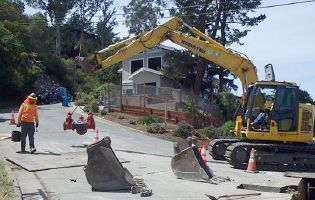
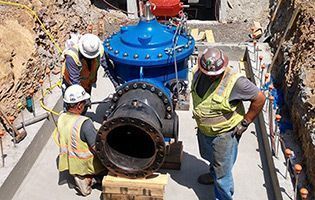
MPWD has embarked on a 5-year CIP to upgrade existing water infrastructure so as to fulfill our mission to provide a safe, high-quality, reliable supply of water for current and future generations. Read More!
Catalog of Enterprise Systems
CA Senate Bill 272 Compliance
Approved on October 11, 2015, SB 272 added a section to the California Public Records Act requiring local agencies to create a catalog of Enterprise System with annual updates.
The Public Records Act was enacted in 1968 and is a component of California’s commitment to open government. MPWD shares that commitment. Section 6253 of the Government Code provides that every person has a right to inspect any public record except those specifically exempted by law.
(650) 591-8941 1075 Old County Road, Suite A, Belmont, CA 94002 mpwd@midpeninsulawater.org Hours: 8:00 am to 4:30 pm, Mon.-Fri. Closed: Weekends and observed holidays.